
Harvard University Named “Greenest University” for Third Consecutive Year by the Green Restaurant Association
For the third consecutive year, the Green Restaurant Association names Harvard its Greenest University!
For the third year in a row, the Green Restaurant Association (GRA) has named Harvard University the Greenest University in the country. This prestigious recognition underscores Harvard University Dining Services’ (HUDS) unwavering commitment to sustainability, climate action, and industry-leading environmental stewardship.
Harvard currently operates 19 Certified Green Restaurants® across its Cambridge and Boston campuses. This includes all undergraduate dining halls, as well as multiple professional schools and campus cafes. By maintaining this distinction for three consecutive years, Harvard continues to set the gold standard for higher education food service operations.
A Rigorous Standard for Excellence Unlike general sustainability claims, the GRA certification is a rigorous, data-driven process. To achieve certification, each location is evaluated by a third-party auditor across eight primary categories:
- Energy Consumption: High-efficiency appliances and smart kitchen practices.
- Water Use: Low-flow fixtures and water-saving filtration systems.
- Waste Management: Robust composting and recycling programs that divert tons of waste from landfills.
- Reusables and Disposables: Eliminating single-use plastics in favor of durable or BPI-certified compostable materials.
- Chemicals and Pollution: Use of non-toxic, biodegradable cleaning agents.
- Food Procurement: Prioritizing local, organic, and plant-forward ingredients.
- Building and Furnishings: Utilizing sustainable materials and energy-efficient lighting.
- Education and Transparency: Engaging students and staff through clear labeling and environmental data sharing.
Highlighting Success: 1,000+ Steps Toward a Greener Future Over the past three years, Harvard’s Certified Green Restaurants have collectively implemented more than 1,100 environmental steps, earning over 4,500 GreenPoints™.
Key highlights of the 2025-2026 cycle include:
- Significant Carbon Reduction: Through expanded plant-based menu options and energy-efficient equipment upgrades, HUDS has lowered the carbon footprint of its daily operations.
- Waste Diversion: 100% of undergraduate dining halls now operate with advanced waste-tracking technology to minimize food waste before it even reaches the plate; and reusable containers to eliminate compostable clamshells.
- Water Conservation: Recent retrofits in the professional school cafes have saved an estimated 500,000 gallons of water annually.
Certified Locations The award-winning locations serving the Harvard community include these 19 Harvard University Dining Services-operated facilities:
- Undergraduate Dining Halls: Annenberg Hall, Adams House, Cabot House, Currier House, Dunster House, Eliot House, Kirkland House, Leverett House, Lowell House, Mather House, Pforzheimer House, Quincy House, and Winthrop House.
- Professional Schools & Cafes: Hillel Kosher Kitchen, Harvard Law School (Wasserstein Hall), Harvard Kennedy School, Harvard Divinity School (Swartz Hall), the SEC Café, and the Harvard T.H. Chan School of Public Health (Sebastian’s Cafe).
"Winning this award for a third year is not just a milestone; it’s a testament to the culture of sustainability we’ve built together with our students and staff," said Smitha Haneef, Managing Director. "We are proud to lead the way in showing that large-scale university dining can advance healthy food and dining programs from sustainable food systems.”
For more information on Harvard’s green initiatives and to view the specific environmental steps taken by each location, visit: https://www.dinegreen.com/harvard
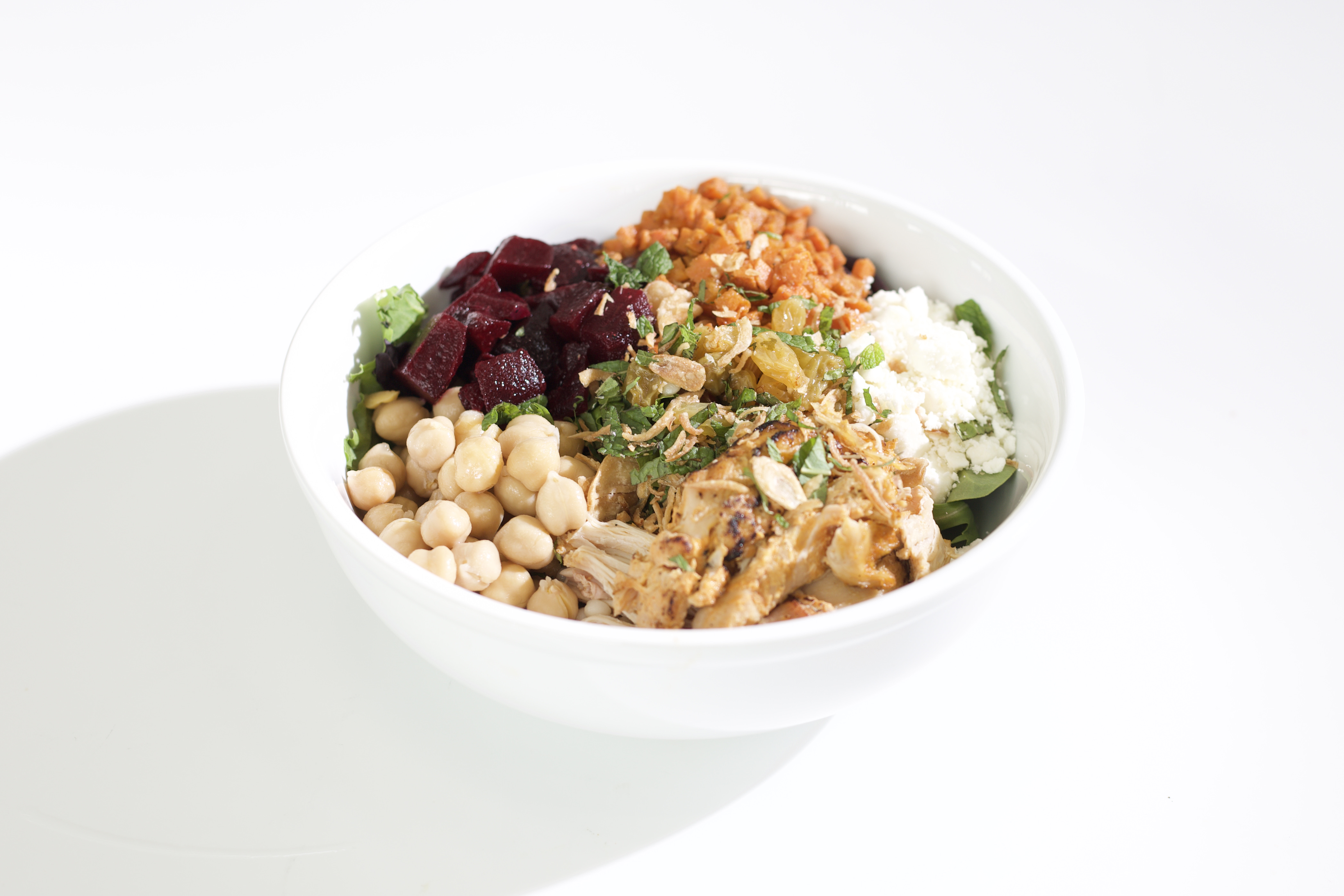
A plant-forward bowl of beets, chickpeas, lentils and halal chicken from the SEC Cafe
GRA Greenest University for the third consecutive year!
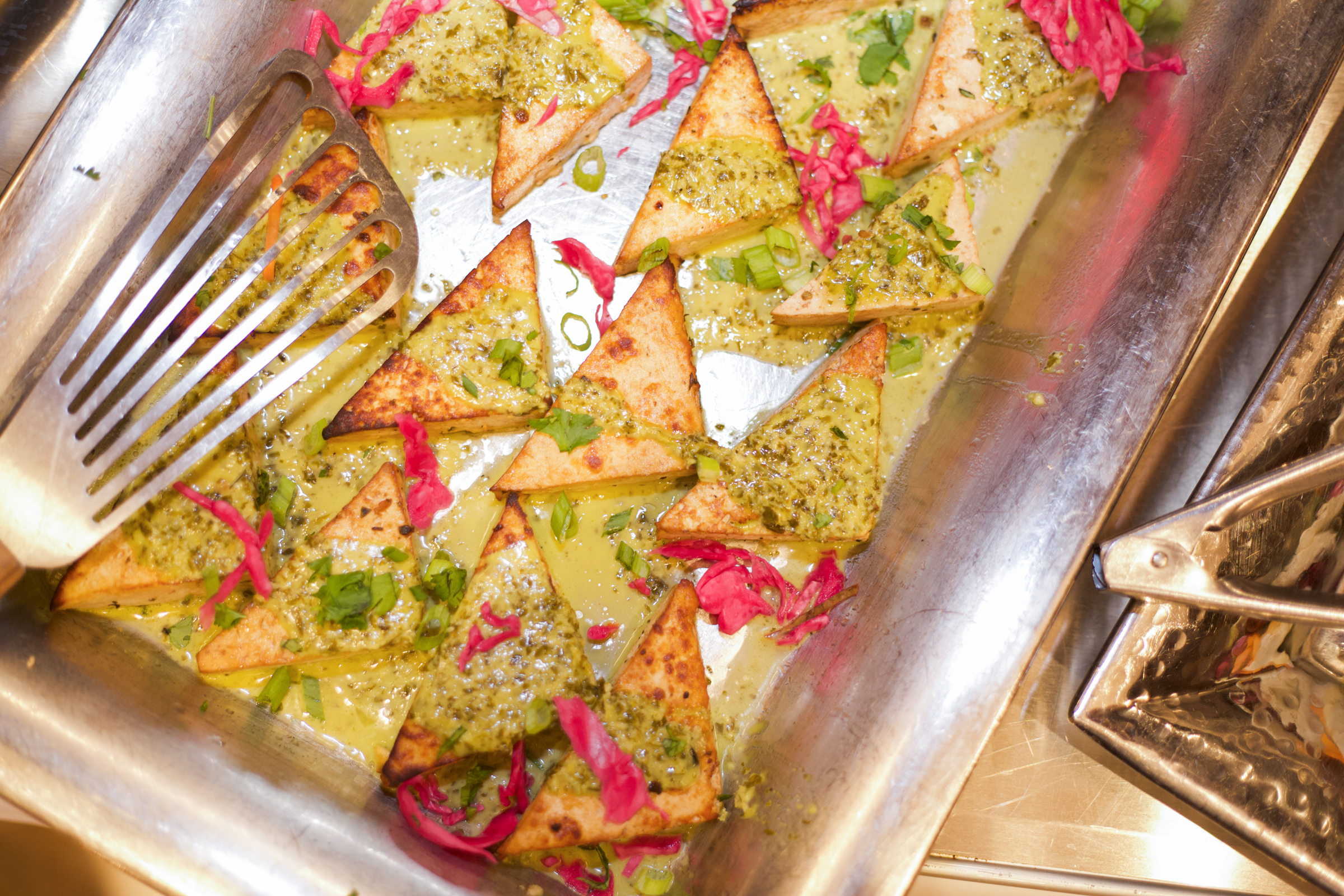
Tofu with green curry sauce served in the undergraduate dining halls